
17 Garage Finds That Could Be Worth More Than You Think

Most garage cleanouts turn up useful everyday things, not hidden fortunes. A few older items, though, may be worth a closer look before they go into a yard-sale box, donation pile or scrap run. Maker’s marks, model numbers, original parts and condition can all help you spot a collector item.
This list focuses on vintage and specialist finds, with clues to check before you decide what to do with them.
17 Garage Finds Worth Checking Before You Clear Them Out
1. Cast-iron woodworking planes
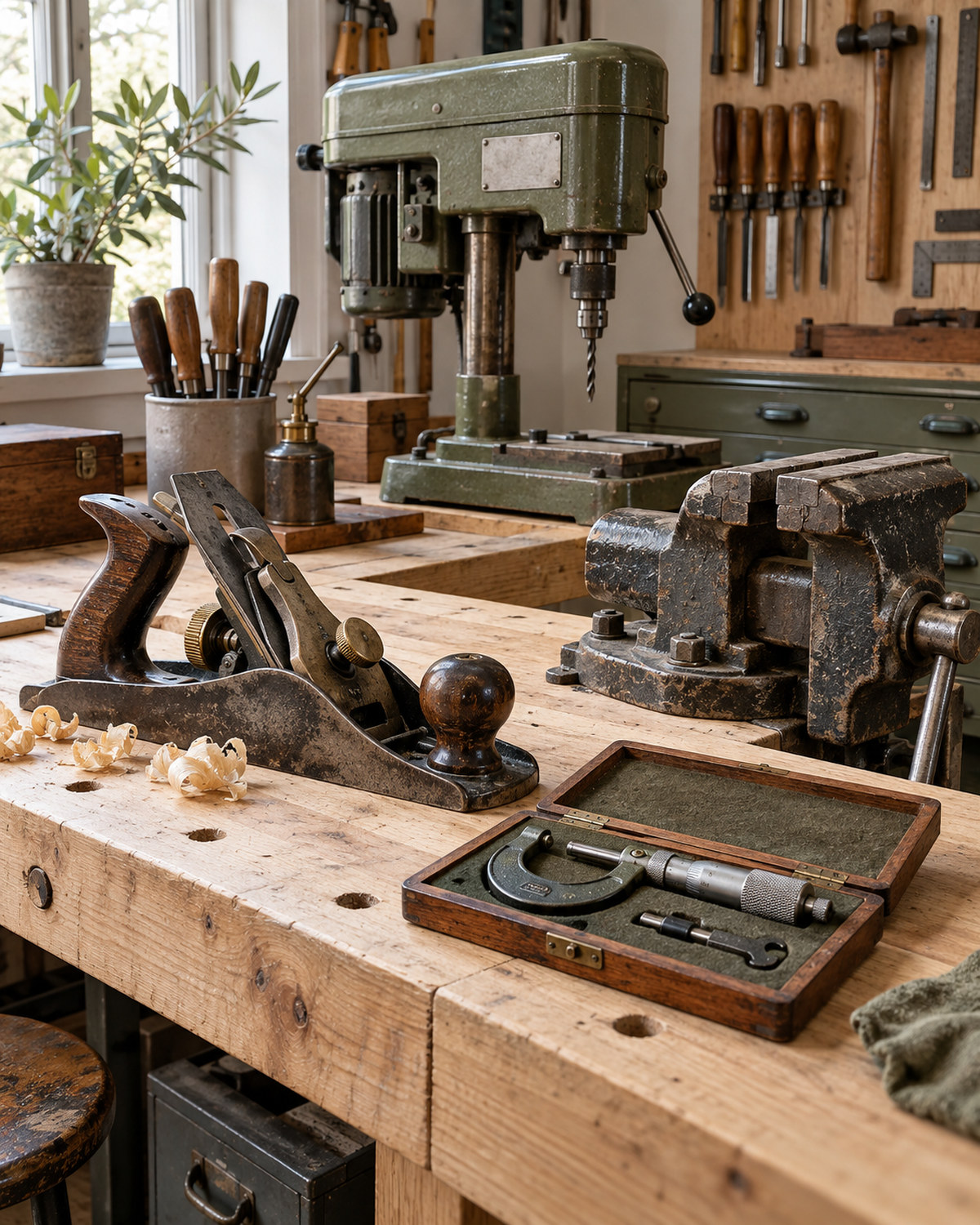
Small hand planes can look like scrap metal, but collectors and woodworkers may look for particular makers, model numbers and sizes. Check the casting and the blade for a name or number. Keep the original knob, tote and blade with the tool, even if they look worn.
2. Heavy bench vises
This post may contain affiliate links.Privacy Policy. Follow us on PINTEREST
A vise fixed to an old workbench may have a maker’s name cast into its body. Photograph the name, jaw width, style and any unusual features. A common vise in usable condition is different from a scarce machinist or blacksmith model, so identify it before assuming all old vises are alike.
3. Machinist measuring tools
Micrometers, calipers, precision levels and measuring instruments from established makers can interest machinists and tool collectors. Look for the maker’s mark, model number and original case. Check whether moving parts work smoothly, but do not force anything that has seized.
4. Older branded power tools
Some older drills, saws and other shop tools have a following, especially when the model is identifiable and the tool is complete. Photograph the nameplate and model number. Note whether it powers on only if you can test it safely; do not plug in frayed, damaged or uncertain wiring.
5. Wooden machinist chests and toolboxes
Look for solid construction, dovetailed drawers, maker labels, original keys and fitted interiors. An empty chest can still be interesting, but a complete one with its original trays or tools is easier for a buyer to assess. Avoid sanding away labels or an old finish before you know what you have.
6. Old advertising signs
Metal and porcelain signs from gas stations, hardware stores, local businesses and familiar brands may attract collectors. Check the back, edges, mounting holes and lettering for clues to age and originality. Reproductions are common, so compare the exact design and measurements with recently sold examples before setting a price.
7. Branded oil cans and garage tins
Small tins, quart cans and other branded garage containers are easy to overlook. Graphics, maker names, shape and condition matter, and a can with its original label can be more interesting than a plain container. Handle anything that may still contain oil or fuel carefully; do not open or ship a container with unknown contents.
8. License plates and plate toppers
Collectors may look for particular states, years, unusual designs, matched pairs or older porcelain plate toppers. Record the state and date, and photograph both sides. Check local rules before listing plates that are still associated with a vehicle.

9. Hubcaps, badges and car emblems
Old hubcaps and car emblems can be hard to identify by appearance alone. Look for a manufacturer’s name, part number, vehicle make and any stamped details on the back. Photograph the front and back, and keep pieces together if they came from the same car or set.
10. Vintage fishing lures and tackle
Before clearing out a tackle box, check for maker names, unusual shapes or colors, and original boxes. A box label can help identify a lure that is otherwise difficult to research. Photograph hooks and sharp pieces carefully, and keep any packaging with the item.
11. Older camping lanterns and stoves
Look for a brand, model number, date code and parts that belong with the lantern or stove. A readable label and a complete set of components make identification easier. Treat fuel-burning equipment as a display or repair item until it has been inspected; do not test an old appliance with unknown condition.
12. Vintage bicycles with original parts
Most used bikes are practical secondhand items, but certain older models have collector appeal. Check the maker, frame serial number, decals and distinctive original parts. Photograph the bike as found before replacing pieces or repainting it, since those details may help a specialist identify the model.

13. Old baseball gloves and wood-shaft golf clubs
Look for a maker’s name, model, player signature or other markings on an older glove. For golf clubs, check the head, shaft and grip for maker or model details. A recognizable name alone does not establish value, so compare the exact item and condition with completed sales.
14. Glass doorknobs and vintage door hardware
Glass knobs, brass backplates, hinges and other architectural hardware may be useful to restorers. Keep pairs and matching screws together. Photograph the shape, color, material and any marks on the spindle or backplate, and avoid polishing away the existing finish before you have identified it.
15. Vintage Christmas decorations
Older glass ornaments, boxed sets and large molded figures may be worth checking when they are intact and identifiable. Look for original boxes, maker labels and matching pieces. Fragile decorations can lose appeal when chipped or incomplete, so inspect each one before grouping items for sale.
16. Vintage radios and stereo equipment
Receivers, speakers and radios may interest collectors or people restoring older audio systems. Record the brand and model number, and note what is included. Do not power up equipment with damaged cords or unknown electrical condition; a clear photo of the back label can help you research it safely.

17. Old auto manuals, catalogs and dealership items
Repair manuals, parts catalogs, dealer brochures and branded promotional pieces can be useful to owners restoring a particular vehicle. Check the make, model year, edition and condition. Keep related papers together, since a complete group is easier for a buyer to identify than loose pages mixed into a box.
Once you have identified a find, compare selling websites and their fees to decide whether it suits a local sale, a wider marketplace or a buyback service.
How to Check Whether a Garage Find Has Resale Value
- Identify the exact item. Photograph the maker, model number, date code and any labels or stamps. Search those details together with the item type.
- Compare completed sales. Use recent sold listings for the same model or a close match. Asking prices are not proof that an item has sold for that amount.
- Compare like with like. Check condition, completeness, packaging and whether the example works. A rare item in poor condition may not match a clean example’s sale price.
- Keep original parts together. Boxes, manuals, keys, blades, fittings and paperwork can help confirm what the item is.
- Pause before cleaning or restoring. Abrasives, new paint and replacement parts can remove useful identifying details or change an item collectors want in original condition.
- Get another opinion for an unusual find. If the markings or sold listings suggest it may be significant, ask a specialist or reputable local dealer before accepting a quick offer.
There is no reliable value based on age alone. A clear maker’s mark and a few minutes of comparison can help you decide whether an item deserves more research, a listing or a place in the regular garage-sale pile.
Also read: 55 things you can sell to make extra money for a broader list of household items and other ways to earn from what you own.
Once you have identified what you want to sell, my practical guide to selling clutter covers where to list items, how to price them and ways to protect your time and personal information.

Hello, I’m Luci, founder of Mums Make Lists. The site is full of useful and fun ideas for life and seasonal celebrations. Plus a growing selection of instantly downloadable fun printables and party planners. Read more.