
Advent Calendar Filler Ideas: A Practical Guide for Every Age

A lovely Advent calendar doesn’t need 24 shopping trips. My starting point would be a few things the recipient will use, some favorite treats and little plans that make December feel special.
Here’s how I’d choose Advent calendar fillers for toddlers, kids, tweens, teens and adults, with a workable budget and a way to handle those ridiculously tiny drawers.
Start here: what kind of calendar are you filling?
- For ages 1–2: prioritize picture prompts for time together and a few age-labeled gifts handed over by an adult.
- For ages 3–5: choose supervised creative play, familiar stories and simple activities.
- For ages 6–12: mix hobby supplies, useful small items, jokes and things to do.
- For teens ages 13–17: start with their actual interests and devices, then add snacks and small plans with friends.
- For adults: choose one or two interests, useful replenishments and personal notes.
Measure the usable inside space before buying anything. A 2-inch drawer does not become a 4-inch drawer because the gift is adorable. Leave room for the wrapper and the drawer mechanism, too.
This post may contain affiliate links.Privacy Policy. Follow us on PINTEREST
Also read: Best Fillable Advent Calendars for 2026 for reusable drawer, pocket and box options.
My simple 24-day formula
Try six useful fillers + six treats + six activity notes + six personal messages. That’s 24 openings with only 12 physical items to source. The treats can be nonfood surprises if food isn’t a good fit.
For a child, that might mean art supplies, familiar packaged treats, six short family activities and six jokes or picture clues. For an adult, switch to hobby supplies, favorite snacks, shared plans and notes about moments you’ve enjoyed together.
Repeats are fine. Four different tea bags can be four days. A coordinated set can be spread out if each day’s piece is usable on its own. A single bead or an unusable puzzle fragment is a less satisfying surprise.
Choose fillers by recipient
Toddlers and preschoolers
A familiar board book, age-labeled chunky crayons, a washcloth or a picture promising a favorite song can all start a pleasant little ritual. For under-threes, the adult should control access to the calendar and its contents. Small calendar compartments are no reason to choose tiny toys.
Kids and tweens
Think drawing supplies, reading accessories, paper projects and small additions to an existing hobby. Children ages 9–12 often appreciate choosing the movie or planning a snack night as much as another trinket.
Teens
Ask for a short list of favorite snacks, colors, hobbies and items they use up. Check phone connectors and case compatibility before buying accessories. Avoid turning a fun calendar into unsolicited skincare advice or a collection of gadgets that need paid accounts.
Women and men
Choose by the person, with stationery, practical accessories, craft supplies, outdoor interests or familiar personal-care favorites. Nobody needs a calendar filled with 24 versions of a hobby they abandoned three years ago.
Food lovers
Factory-sealed individual portions make planning easier. Read ingredient and allergen labels on the exact package and retain them. Put perishables in the refrigerator and use a calendar note to direct the recipient there.
A shared household calendar
Choose shared pleasures such as a breakfast plan, a game-night prompt or a tea tasting. Household jobs aren’t automatically gifts. I would keep cleaning supplies out unless the recipient has actually asked for them.
Homemade fillers
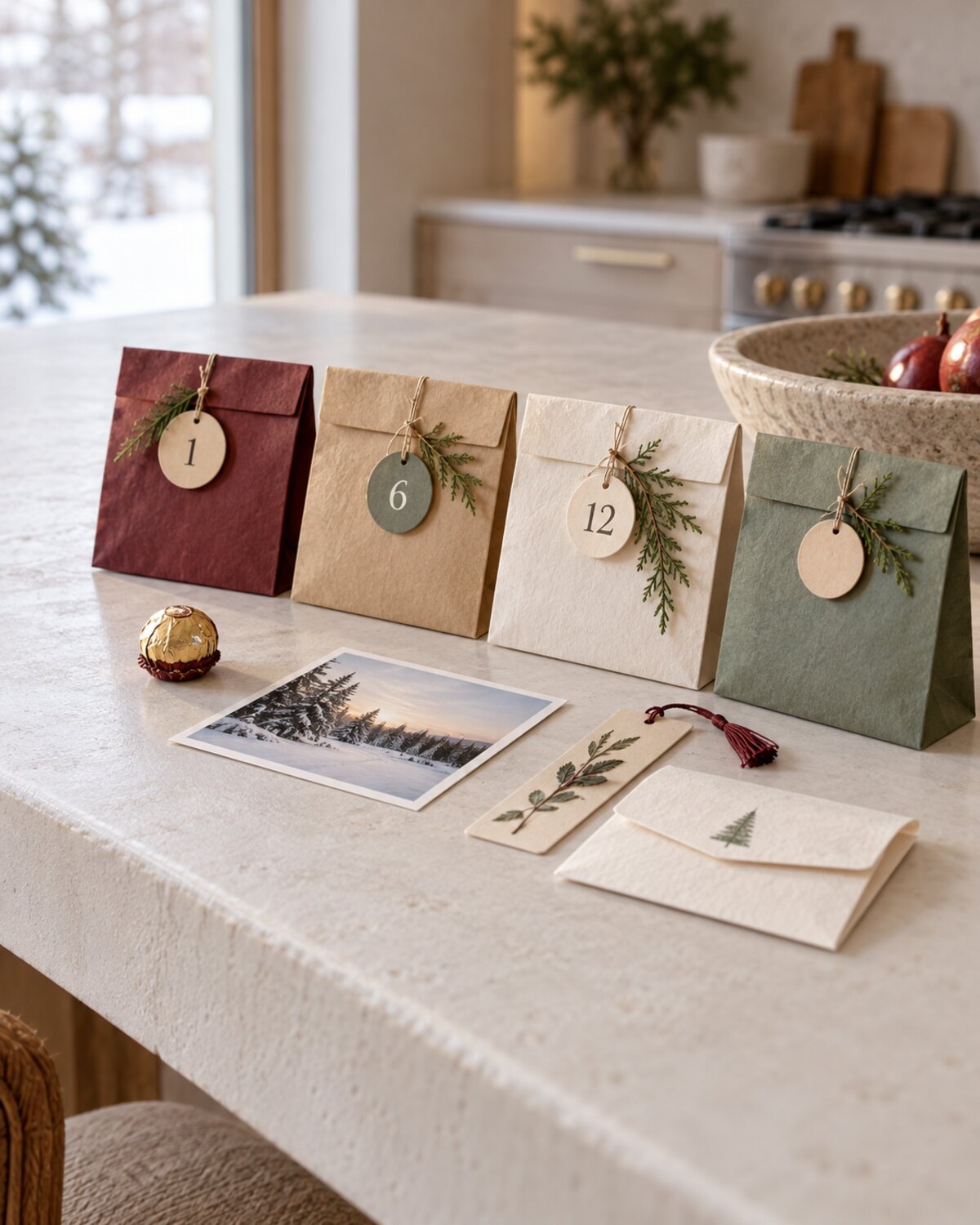
Photo cards, handwritten recipes, paper bookmarks and personal activity coupons are good starting points. Choose a few repeatable projects so making the calendar doesn’t become a second job.
Set the total budget first
A $30 planning budget could allow $6 for packaging, $12 for useful items, $8 for treats and $4 as a buffer. That is an example allocation, not a claim about current store prices. Tax and shipping need to fit inside your limit, too.
Divide the total price of a multipack by the pieces you’ll actually use. A $12 set doesn’t become a $1 purchase because one part goes in today’s pocket. Count the whole checkout cost, then use the remaining pieces elsewhere only if you need them.
Plan around December 2026
December 1, 2026 is a Tuesday. Put longer activities on December 5–6, 12–13 and 19–20, then reserve quick notes or familiar treats for busy weekdays. Christmas Eve is Thursday, December 24.
For a 12-day countdown ending December 24, start December 13. If you want the final opening on Christmas Day, start December 14. Label the dates clearly so everyone knows the plan.
Also read: 24 Advent calendar activities for kids ages 3–8.
What if the gift won’t fit?
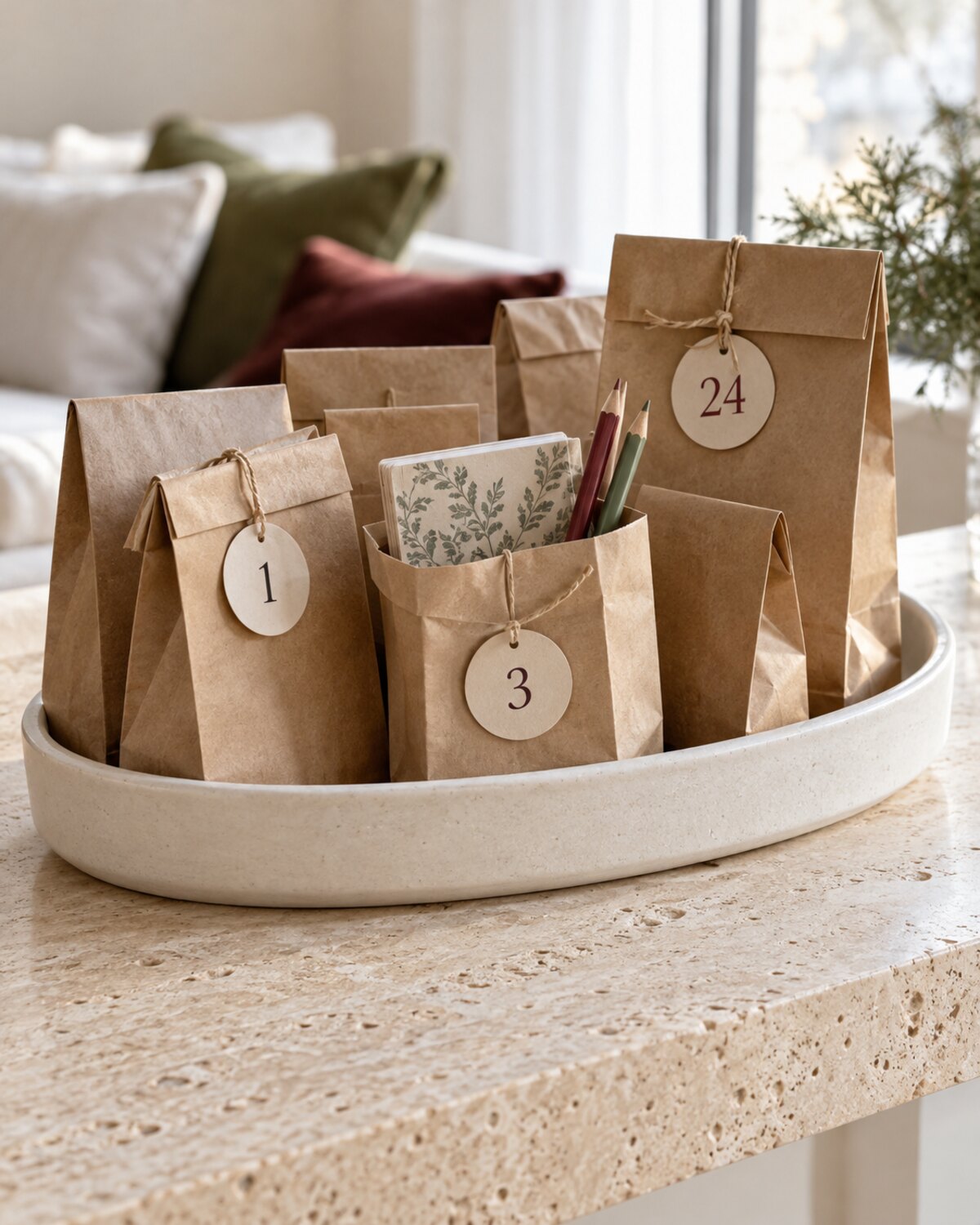
Put a numbered card in the pocket and keep the matching gift in a separate basket. For young children, hand it over yourself. Older recipients can follow a short clue to an accessible hiding place.
Keep food separate from scented items and check the storage instructions. Don’t split products in a way that loses ingredients, age warnings or instructions.
A five-minute planning checklist
- Decide who the calendar is for and how many people are sharing it.
- Choose 12, 24 or 25 openings and write down the actual dates.
- Measure the compartments and choose a total spending cap.
- Fill the activity dates first, then add notes, treats and useful items.
- Number a master list before wrapping anything.
- Keep ingredients, instructions and important packaging.
- Leave a few plans easy to swap if December gets busy.
I would choose a calendar you can enjoy filling without resenting it by day nine. A small, thoughtful countdown is plenty.
Also read: Meaningful family Christmas traditions.
Also read: Ages 1–5 · Ages 6–12 · Teens.
Browse more Christmas ideas for your family.

Hello, I’m Luci, founder of Mums Make Lists. The site is full of useful and fun ideas for life and seasonal celebrations. Plus a growing selection of instantly downloadable fun printables and party planners. Read more.