
How to Choose a Christmas Decor Theme You’ll Love
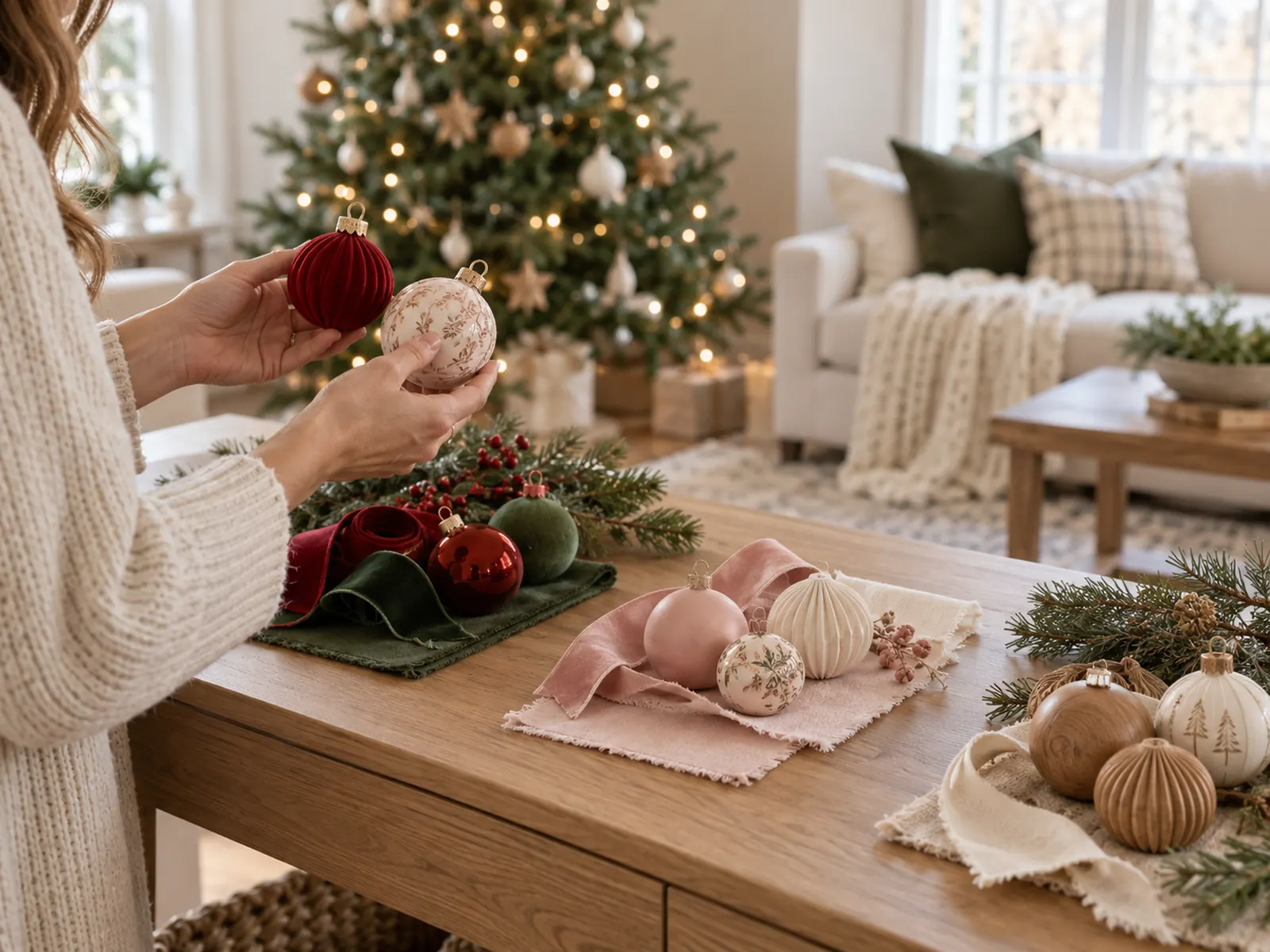
Fancy having a new Christmas decor theme this year and not sure how to go about choosing one? Here’s my quick guide to making a choice that works for you and not against you in the run-up to one of the most hectic times of the year.
To my mind and in keeping with the current zeitgeist, the best theme gives your decorations a sense of direction while still leaving room for the ornaments you already love, the handmade pieces your kids bring home, and the traditions that make your Christmas feel like yours.
If you are deciding between classic red and green, a softer natural look, or something more playful, use these simple tips to settle on a theme that works in your actual home. Our Christmas decor trends for 2026 roundup can help you compare different looks.
1. Start with the room, not the trend
This post may contain affiliate links.Privacy Policy. Follow us on PINTEREST
Before saving dozens of inspiration photos, look at the room where your tree will go. Notice the colors that are already there: the sofa, rug, curtains, wall color and wood tones. Your Christmas palette does not have to match every item, but it will feel more settled if it relates to at least one or two of them.
For example, a room with warm wood, cream upholstery and brass details could take a natural woodland palette, traditional red and green, or champagne and gold. A room with crisp white walls and cool gray accents might suit a Scandinavian look, a white forest theme or blue and silver.
Take one photo of the room in daylight and another in the evening. The second is useful because most of your holiday decorating will be seen under lamps and tree lights.
2. Decide how you want the room to feel
Choose a few words for the mood you want. Cozy and nostalgic? Calm and simple? Colorful and full of energy? Elegant and candlelit? This is a more useful starting point than asking which trend is the most popular, because it helps you rule out looks that do not feel like you.
Try this quick prompt: When I walk into the room at Christmas, I want it to feel ______. Pick no more than three words. Keep them nearby as you collect ideas.
3. Choose a palette you can repeat
A Christmas theme is easier to pull together when you limit the palette. Pick a main color, a supporting color and one accent. Neutrals such as green, cream, wood or metallic finishes can help connect them.
- Traditional: red and green, with warm white or brass.
- Scandinavian: natural green and warm white, with wood and a small amount of red.
- Playful nostalgia: bright red, candy pink, turquoise or lime, with shiny ornaments and familiar 1990s-inspired shapes.
- Soft and natural: olive, cream and muted brown, with fruit, greenery or handmade details.
These are starting points, not rules. Save a small group of images and notice which colors keep appearing. If every image you love has a different palette, you may be choosing by individual object rather than by an overall look.
4. Pick one focal point
Give the theme a clear anchor so the rest of the room does not have to compete. It might be the tree, a dramatic topper, a favorite collection of vintage ornaments, a garland over the mantel or a particular color repeated in the tree and table setting.
For a tree-led theme, decide on its overall silhouette and feel first: full and traditional, sparse and natural, flocked and wintry, or slim for a smaller space. Then choose ornaments and ribbon that support it. Our guide to styling a Christmas tree and avoiding common decorating mistakes walks through how to layer and space decorations. If your favorite detail is a collection of heirloom ornaments, let those lead and keep the surrounding decorations quieter.
5. Shop your own holiday boxes
Bring out the decorations you already own before buying anything new. Sort them into three groups: pieces you definitely want to use, pieces that might work with the new palette, and pieces you are ready to store or pass along. You do not need to replace everything to make a theme feel fresh.
Choose a few sentimental or favorite pieces to keep, then add only what is missing. A new ribbon, a different tree skirt or a small set of ornaments in your accent color can shift the look without starting from scratch.
6. Check the theme against real life
Think about the room’s size, how the space is used and who lives with the tree. A wide tree may block a walkway; delicate glass ornaments may need to sit higher if little hands or pets can reach them; a large collection of decorations may not suit a small apartment. If you host, leave enough space for people to move around and sit comfortably.
Also consider storage. A theme built around a few versatile pieces is easier to put away than one that needs a large collection of fragile, single-use decorations.
7. Make a small test before you commit
Lay a few ornaments, ribbon and greenery together on a table, or make a simple mood board from your saved images and the pieces you already own. Photograph the combination in the room where it will live. This catches color clashes and scale problems before you buy a cartful of decorations.
Try to include one example of each thing you plan to repeat: a large ornament, a small ornament, ribbon, greenery and your chosen accent. If the mix looks balanced together, you have a workable plan.
A quick Christmas theme checklist
- Does the palette relate to the room?
- Does the mood feel right for your household?
- Can you reuse decorations you already have?
- Is there one clear focal point?
- Will the plan work with your space, budget and storage?
- Have you tested a few pieces together before shopping?
If you can answer yes to most of these, you have a theme worth building on. For a little inspiration, browse our Christmas tree themes for 2026 and use the ideas as a starting point, then adapt the colors and details to suit your home.

Hello, I’m Luci, founder of Mums Make Lists. The site is full of useful and fun ideas for life and seasonal celebrations. Plus a growing selection of instantly downloadable fun printables and party planners. Read more.